Gutter guards under oaks still need attention
Covers keep out leaves, but the finest material still gets through or sits on top. Here is what to expect from guards in an oak neighborhood.
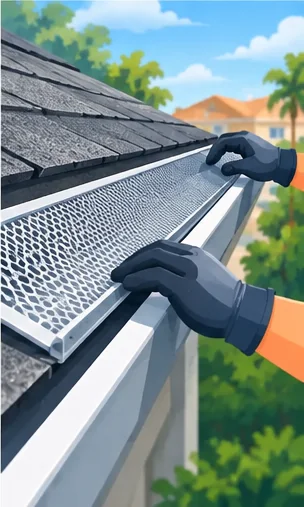
A guard changes the problem, not the source
Mesh, screen and reverse-curve covers all aim to let water in and keep debris out. They do reduce what reaches the trough. They also give leaves a flat surface to lie on, and under a wide oak canopy that surface fills.
Catkins are thin enough that they may thread through some mesh, while laurel oak acorns and leaf fragments gather along the top edge. UF/IFAS lists the foliage and fruit of the laurel oak as a litter problem, so a roof beneath one keeps producing material for months.
The catkin spring and the fall leaf drop
Two periods stand out. In March and April, live oak catkins arrive in volume and a cover can mat over within a few weeks. From October into winter, laurel oak leaves turn brown and fall, along with acorns, and the wet leaves cling to a cover surface rather than blow off.
A guard that is brushed or rinsed after each wave generally sheds water far better than one left alone for a year. Tell us what guard type you have, because some lift off and some are screwed into the shingle edge.
Signs a covered gutter needs a visit
- Water spilling over the front of the cover in an ordinary rain
- Green growth or a dark crust along the top surface
- Sagging where debris holds weight and moisture
- Stains on fascia boards or a damp line on the siding below
If you are not sure what you have, the quote request lets you mention the cover type and a rough tree situation. See also the Belle Isle gutter guide for the seasonal calendar.
Beat the next wave of leaves
Send one short request for a free quote. We call to confirm the details, then clean the gutters and flush the downspouts.